
Calacatta marble protection

Calacatta,
kept pristine.

A Calacatta slab is often the single most expensive thing in the kitchen. Our film keeps the bright white ground and the bold veining exactly as they were on installation day.

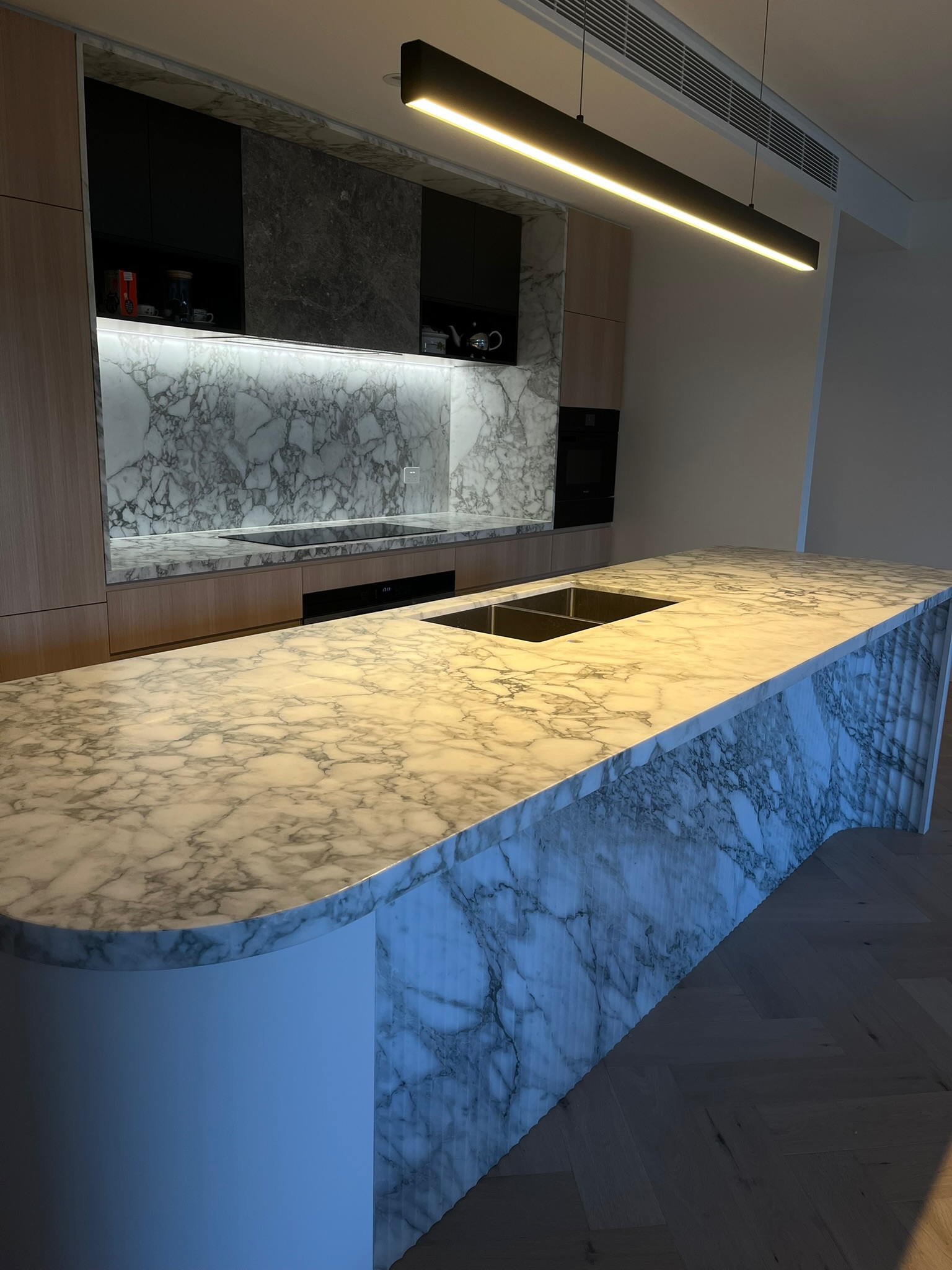
Polished marble kitchen island in a finished Sydney home
White marbleSatin or gloss

Why Calacatta marks

Bright white
shows everything.

Calacatta is prized for its clean white background and thick veins of grey and gold. That white is exactly what makes damage obvious. A lemon wedge leaves a dull ring you can see from across the room, and a splash of red wine or turmeric can tint the stone before anyone notices.

Like every true marble, Calacatta is calcium carbonate. Acids react with it and dissolve the surface, which is called etching. Sealers slow stains but cannot stop that reaction.

Calacatta marble at a glance

Know your
stone.

Typical figures. Natural stone varies from slab to slab.

Stone typeMetamorphic marble
Main mineralCalcite (calcium carbonate)
Where it comes fromThe Apuan Alps near Carrara, Tuscany
HardnessAbout 3 on the Mohs scale
PorosityModerate, higher when honed
Etches with acidYes, quickly
Typical finishesPolished or honed
Best film finishGloss for polished, satin for honed
13 yearsWritten warranty
250°CHeat rating
Satin or glossMatched to your finish
RemovableProfessionally, if ever needed

Living with Calacatta

A slab chosen
for its veins.

Calacatta is usually specified for one reason: the veining. Designers bookmatch slabs so the pattern flows across an island or up a splashback, and a single dull patch interrupts that flow in a way it would not on a plainer stone.

Because genuine Calacatta is quarried in relatively small volumes and priced accordingly, most owners want it to look the same in ten years as it did at handover. Film is the only way to get close to that in a working kitchen, because it deals with etching, which no sealer does.

Calacatta also tends to be installed in bright, open kitchens with plenty of natural light. Etch marks show most in raking light, so a sunny Sydney kitchen makes them more visible, not less.

See it work

Spills on,
spills off.

The same kind of everyday spills your calacatta marble will meet, on a protected benchtop. Everything stays on the surface and wipes away.

Filmed on our earlier film. The film we install today carries a 13-year warranty and a 250°C rating.

What the film does

Protection that
stays out of sight.

  • Stops etching. Acids land on the film and never touch the marble.
  • Keeps stains on top. Wine, oil and coffee wipe off rather than soaking in.
  • Leaves the veining clear. Near-invisible, in satin for honed slabs or gloss for polished.
  • Handles hot pans. Rated to 250°C.
  • Covered for 13 years. Backed by our written warranty.

How it works

From estimate
to handover.

  1. Estimate. Answer four quick questions in the form below. We respond within 24 hours.
  2. Assessment. We confirm the stone is calacatta marble, check its finish and look for any existing etching or staining.
  3. Application. The film is applied edge by edge in satin or gloss to suit your calacatta marble.
  4. Handover. You get care instructions and a 13-year written warranty.

Care

Looking after it
once it is protected.

01Wipe spills

with a soft damp cloth. There is no rush, but there is no reason to leave them either.

02Use a pH-neutral cleaner.

Gentle everyday products are all the film needs.

03Skip scourers and abrasive creams.

They can dull the film’s surface over time.

04Keep cutting on boards.

The film is protection, not a chopping surface.

Will the film dull my polished Calacatta?

Choose the gloss film for a polished slab and it keeps the reflection. Satin suits honed Calacatta. We show both on your stone before you decide.

Is Calacatta Gold treated any differently?

No. Calacatta Gold, Borghini, Oro and Viola are all marbles and are protected the same way.

When should a new Calacatta benchtop be protected?

As soon after installation as possible, before the first etch. Book us for the week after your stonemason finishes.

Does Calacatta need to be sealed before the film goes on?

No. If it was sealed at installation that is fine; the film goes over it. If it was not, there is no need to seal it first.

What is the difference between Calacatta and Carrara?

Both come from the same region. Calacatta has a whiter background with bolder, thicker veins; Carrara is greyer with softer, finer veining. Both etch the same way. See our Carrara page.

Free estimate

An estimate
in 30 seconds.

Four quick answers and your details. We will respond within 24 hours with an estimate and, if needed, arrange a visit.

Estimate in 30 seconds

Get my free estimate.

What are you protecting? Tick any
What stone is it?
Which finish would you like?
Where is the project up to?

Where should we send your estimate?

Have photos or plans? We will text you after you submit, just reply with them.

CallFree estimate