
Travertine protection Sydney

Travertine, with
nothing soaking in.

Travertine’s open, earthy grain is why people choose it, and also why it marks. Our film keeps acids and spills on the surface while the stone keeps its warm, honed character.

  • Satin
  • Gloss
  • 13-year warranty
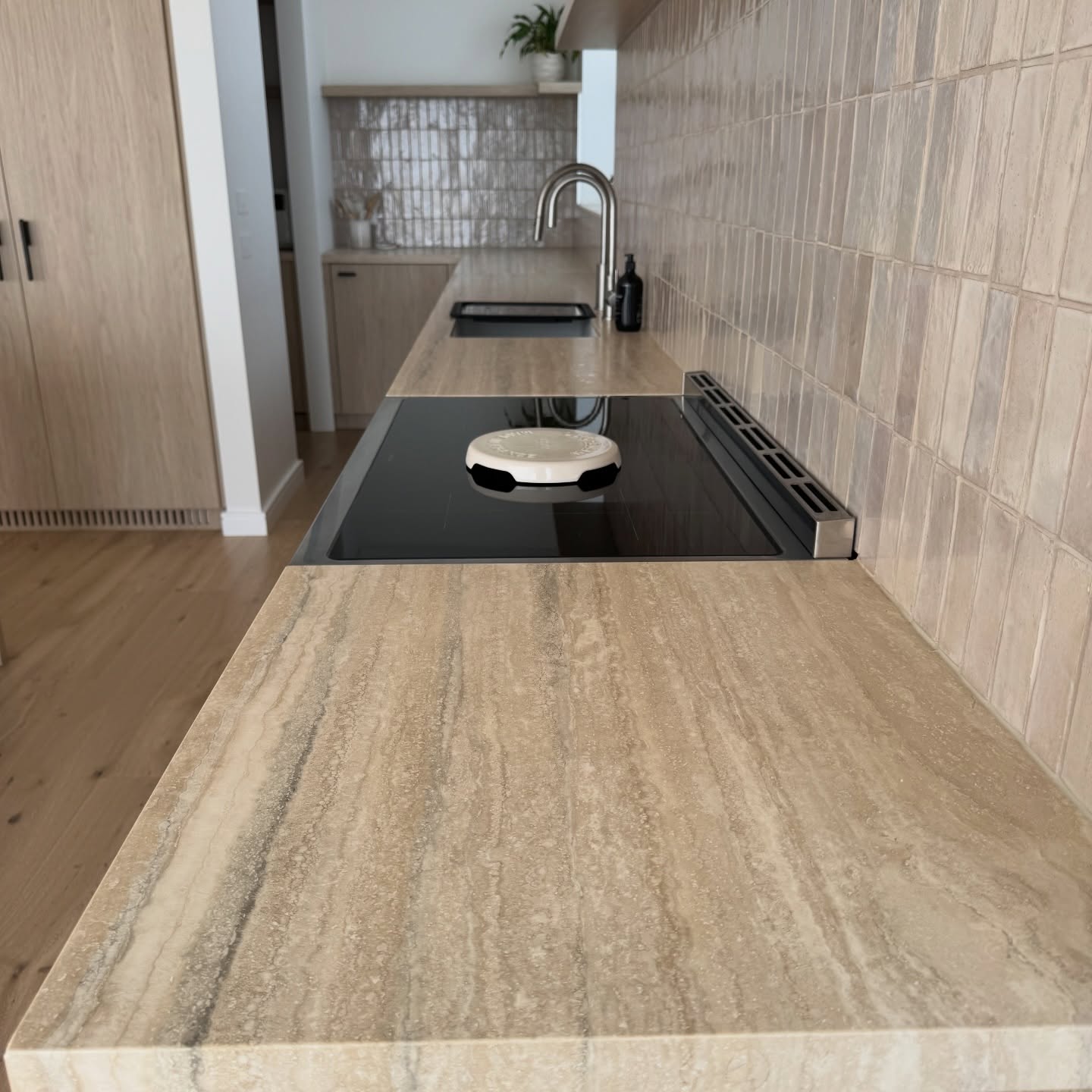
Long travertine benchtop protected with Stone Shield film, running past an induction cooktop to an undermount sink
Recent projectTravertine kitchen

Why travertine

A limestone,
with all that implies.

Travertine is a limestone formed around mineral springs. Like marble, it is mostly calcium carbonate, so lemon juice, vinegar, wine and many cleaning sprays will etch it on contact.

It is also more porous than most benchtop stones, with a natural open grain. Oil and coffee find their way in fast, and a sealer only slows that down. It has to be reapplied, and it never stops acid.

A protection film solves both at once. The surface is closed over, acids have nothing to react with, and the stone underneath is left exactly as it was installed.
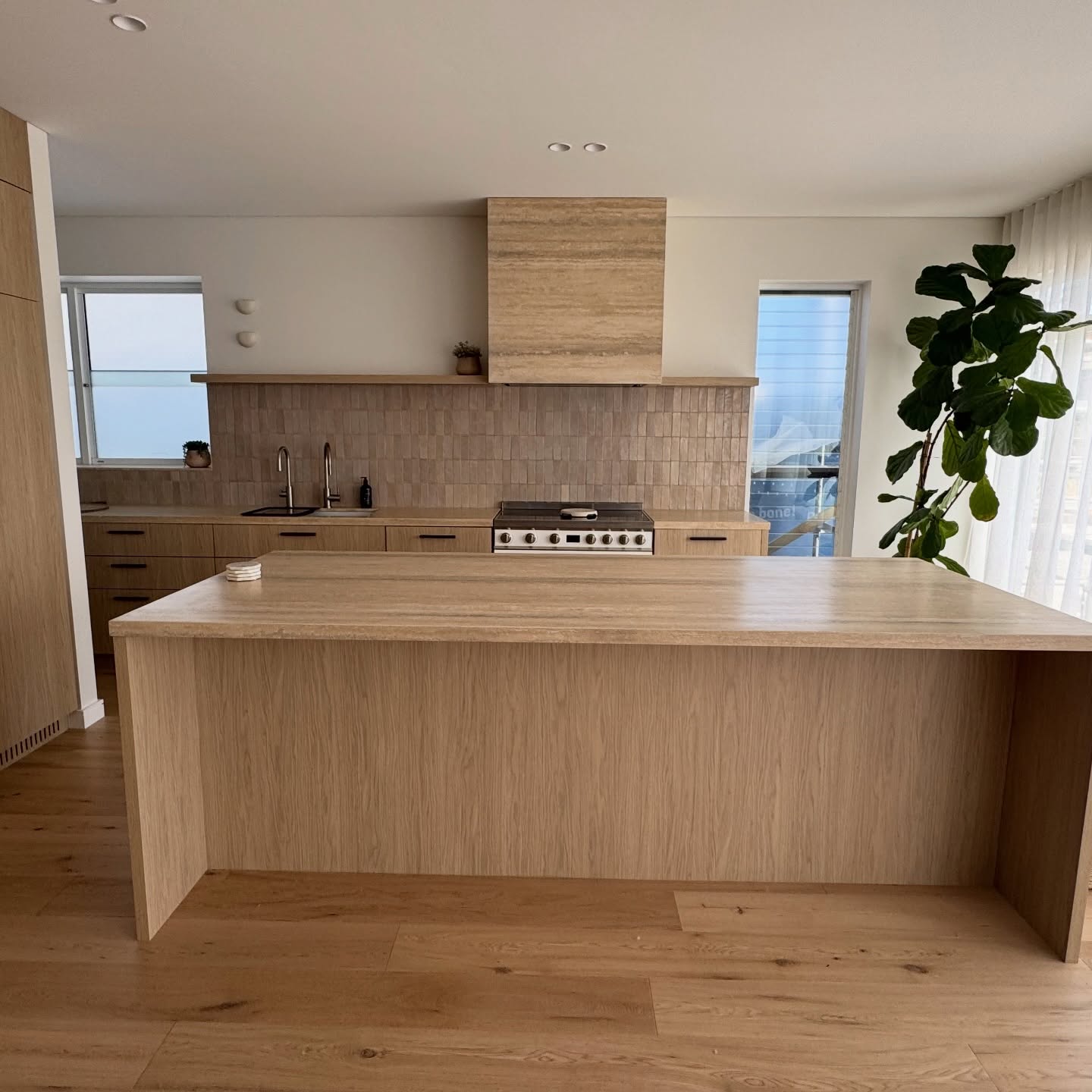
Travertine kitchen island and rear bench with oak joinery, protected end to end with Stone Shield film
Island and rear bench, satin film
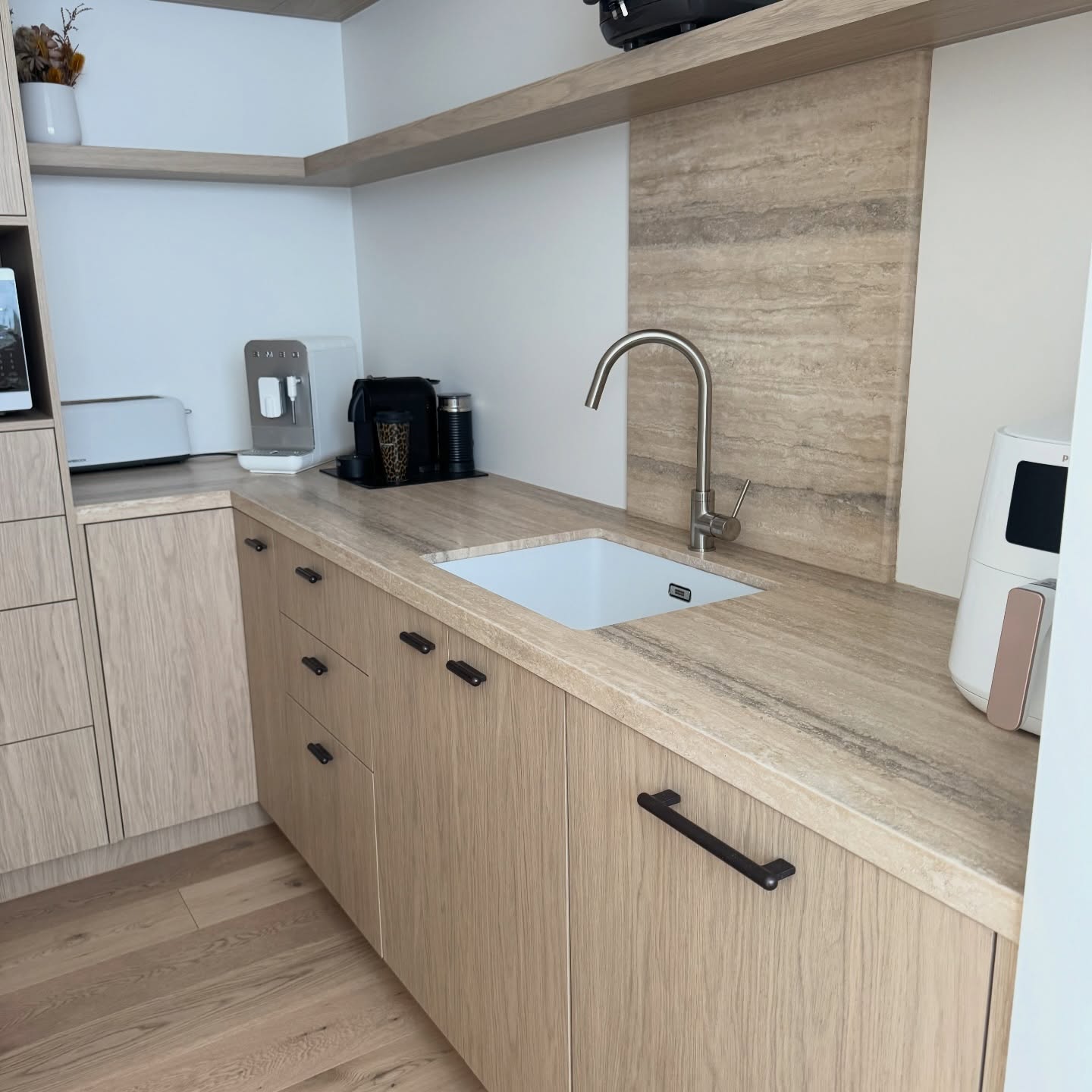
Travertine butler's pantry bench and splashback with an undermount sink, protected with Stone Shield film
Butler’s pantry and splashback

Travertine at a glance

Know your
stone.

Typical figures. Natural stone varies from slab to slab.

Stone typeSedimentary, a limestone formed at mineral springs
Main mineralCalcite (calcium carbonate)
Where it comes fromItaly, Turkey, Iran and elsewhere
HardnessAbout 3 to 4 on the Mohs scale
PorosityHigh, with natural voids
Etches with acidYes
Typical finishesHoned and filled, tumbled, or polished
Best film finishSatin for honed, gloss for polished

Living with travertine

Warm, earthy
and on trend.

Travertine has come back in a big way in Sydney: creamy, walnut and silver varieties on kitchen islands, vanities, dining tables and sculptural furniture. Its soft, matte surface and banded texture make a room feel warm and relaxed.

Those natural holes and the open grain are also where problems start. Filled voids can loosen or crack over time, and unfilled texture collects crumbs, oil and spills. Around sinks and cooktops, unprotected travertine often develops darker patches within the first year.

Film closes the whole surface in one layer, so filled voids are sealed over and spills sit on top, while the stone keeps its natural, honed look.

Care

Easy care,
day to day.

01Wipe with a damp cloth.

Warm water and a drop of pH-neutral detergent is enough.

02Skip vinegar and citrus cleaners

on any unprotected travertine nearby.

03Use boards and trivets.

Travertine underneath is soft.

04Tell us about any loose fill

before installation, so it can be repaired first.

Does travertine etch like marble?

Yes. Travertine is a form of limestone, mostly calcium carbonate, so acids such as lemon juice and vinegar etch it in the same way they etch marble. Film keeps acids off the stone.

What about the holes in travertine?

Travertine forms with natural voids. On benchtops these are usually filled at the factory. The film goes over the filled surface and seals it, so crumbs and liquids cannot collect in the grain.

Satin or gloss for travertine?

Most travertine is honed or matte, so satin is the usual choice because it keeps that soft, natural look. Polished travertine can take gloss. We will show you both on your stone.

Can outdoor travertine be protected?

Tell us about it. Suitability outdoors depends on exposure and how the surface is used, so we assess those projects individually.

Free estimate

An estimate
in 30 seconds.

Four quick answers and your details. We will respond within 24 hours with an estimate and, if needed, arrange a visit.

Estimate in 30 seconds

Get my free estimate.

What are you protecting? Tick any
What stone is it?
Which finish would you like?
Where is the project up to?

Where should we send your estimate?

Have photos or plans? We will text you after you submit, just reply with them.

CallFree estimate