
Marble etching guide

Marble etching,
and how to stop it.

That dull, cloudy ring where a lemon wedge sat is not a stain. It is the surface of the marble, dissolved. Here is what causes it, what fixes it, and what prevents it.

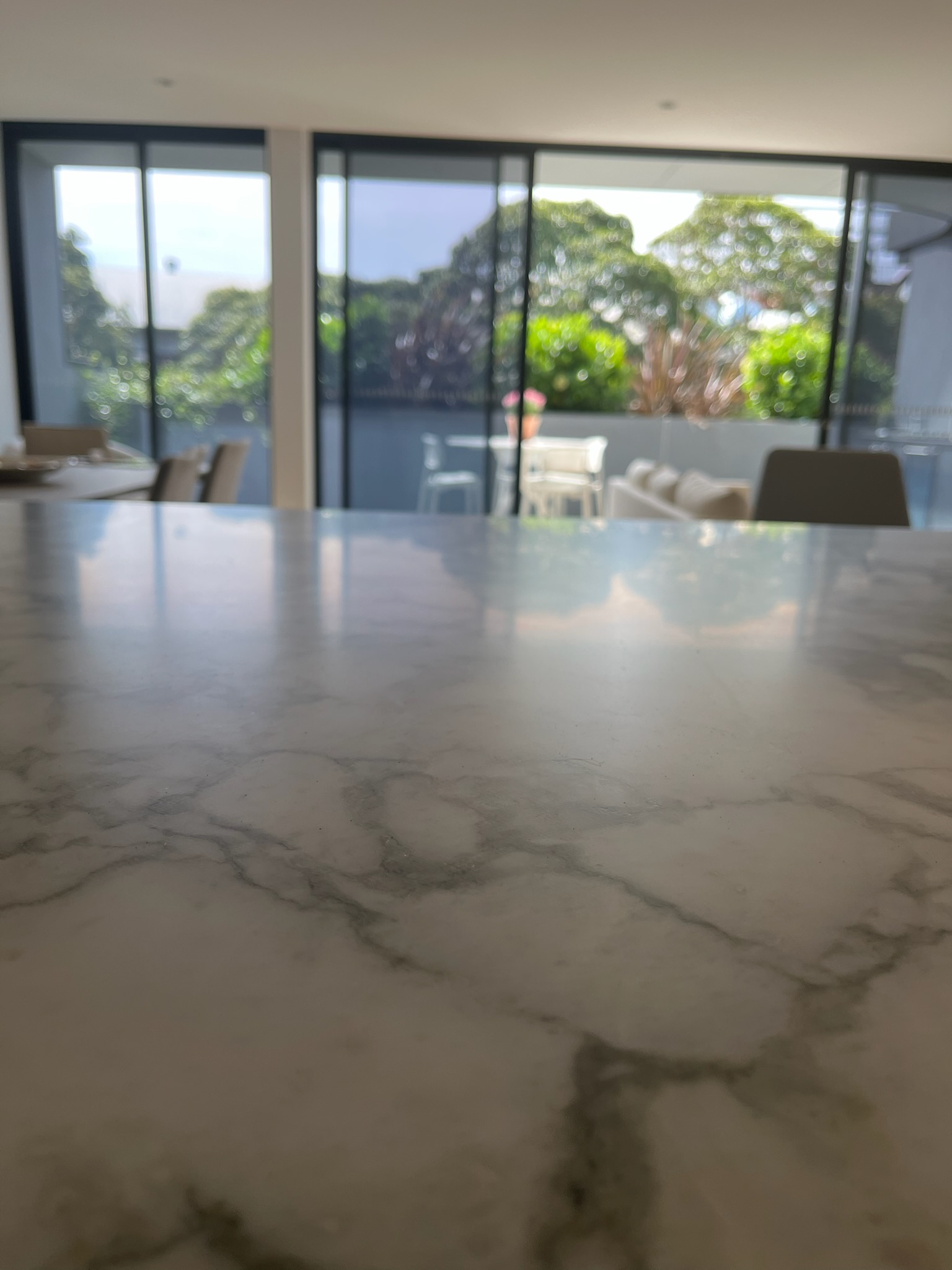
Close view of richly veined marble
Guide4 minute read

What is etching

A chemical reaction,
not a stain.

Marble, limestone and travertine are made mostly of calcium carbonate. When an acid touches them, it reacts with that calcium carbonate and dissolves a microscopically thin layer of the surface. What is left is rougher than the stone around it, so it scatters light differently. On polished marble that shows as a dull, cloudy patch. On honed marble it can look like a lighter or slightly rough spot.

It happens fast. A few minutes of lemon juice is often enough.

Common causes in a Sydney kitchen

  • Lemon, lime and other citrus
  • Vinegar, salad dressings and tomato-based sauces
  • Wine, soft drinks and fruit juice
  • Many bathroom and kitchen cleaning sprays
  • Some cosmetics, perfumes and toothpaste on vanities

Etch or stain?

How to tell
the difference.

EtchStain
What it isDamage to the surfaceSomething absorbed into the stone
Looks likeDull, cloudy or lighterDarker or coloured
Caused byAcidsOil, wine, coffee, turmeric
Sealer helps?NoSlows it down
Film helps?Yes, acid never reaches the stoneYes, liquid stays on the surface

Prevention

Why sealing is not
enough on its own.

Most marble is sealed when it is installed, and many owners are surprised when it still etches. That is because a penetrating sealer works inside the stone, filling pores to slow absorption. The surface is still calcium carbonate, and acid still reacts with it.

To stop etching, the acid has to be kept off the stone altogether. There are only two ways to do that: wipe every spill immediately, every time, or put a physical layer on top of the marble. That is what an anti-etch protection film is.

We compare the two approaches side by side in sealer vs protection film.

See it work

Lemon on marble,
without the etch.

Lemon, coffee and turmeric on a protected benchtop, then wiped away. Shot on our earlier film; today’s film carries a 13-year warranty.

  • EtchingLemon juice sits on the film, not the marble
  • StainingCoffee and turmeric wipe off the surface
  • HeatCookware straight off the stove, up to 250°C
Get my free estimate
Does sealing marble stop etching?

No. Sealers soak into the stone to slow down liquids being absorbed. Etching is a chemical reaction on the surface itself, and a sealed surface is still calcium carbonate, so acid still etches it.

Can etch marks be removed?

Light etching on polished marble can often be honed and repolished by a stone restorer. Deeper etching needs more work. Either way it is a repair, not a clean, and it will come back unless the surface is protected.

Is etching the same as staining?

No. A stain is something that has soaked into the stone and left colour behind. An etch is damage to the surface of the stone. Etches look dull or lighter; stains look darker or coloured.

Which stones etch?

Stones that contain calcium carbonate: marble, limestone, travertine and onyx. Some dolomite etches more slowly. True quartzite and granite generally do not etch, though they can still stain.

What stops etching?

Keeping acid off the stone. In practice that means wiping every spill immediately, or putting a physical barrier on the surface, which is what protection film does.

Free estimate

An estimate
in 30 seconds.

Four quick answers and your details. We will respond within 24 hours with an estimate and, if needed, arrange a visit.

Estimate in 30 seconds

Get my free estimate.

What are you protecting? Tick any
What stone is it?
Which finish would you like?
Where is the project up to?

Where should we send your estimate?

Have photos or plans? We will text you after you submit, just reply with them.

CallFree estimate