
Comparison guide

Sealer vs
protection film.

Both are sold as “stone protection”. They work in completely different ways and protect against different things. Here is the honest comparison.

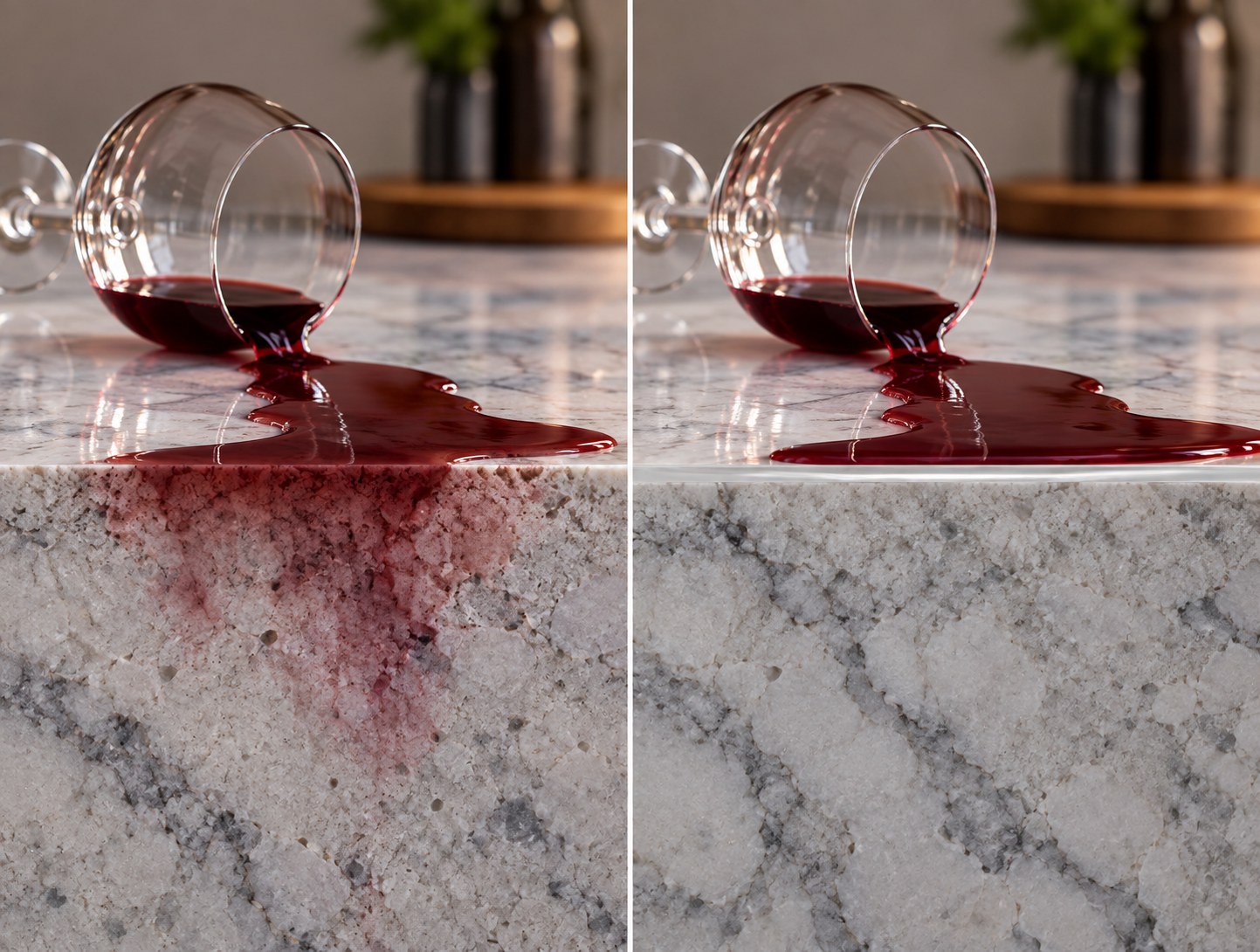
Red wine soaked into unprotected stone beside the same spill sitting on top of Stone Shield film
Guide5 minute read

The short answer

Sealer slows stains.
Film stops etching too.

A sealer is a liquid that soaks into the pores of the stone. It slows down how fast spills are absorbed, which buys you time to wipe them up. It does nothing about acid, because the surface is still bare stone.

A protection film is a thin physical layer on top of the stone. Spills and acids land on the film, not the stone, so it prevents both staining and etching.

If your stone is quartzite or granite, etching is not usually a concern and sealing may be all you need. If it is marble, limestone or travertine and it is in a kitchen, sealer alone will not keep it looking new.

Side by side

What each
actually does.

SealerProtection film
How it worksSoaks into the poresLayer on top of the surface
Stops etchingNoYes
Stops stainingSlows absorptionLiquids stay on the surface
HeatNo change to the stoneRated to 250°C
AppearanceInvisibleNear-invisible, satin or gloss
UpkeepReseal every 1–2 yearsNormal cleaning only
WarrantyVaries by product13 years
Upfront costLowerHigher
ReversibleWears off over timeProfessionally removable
The same red wine spill on two stone benchtops. Without film the wine has soaked into the stone; with Stone Shield film it sits on top and the stone underneath is clean. No film Stone Shield film

Choosing

Which one
is right for you?

  • Choose film for marble, limestone or travertine benchtops, islands and vanities that get used every day, or any stone where you want it to look the way it did on installation day.
  • Sealer may be enough for granite or true quartzite, or for low-traffic surfaces where a little patina over time is part of the appeal.
  • Not sure what your stone is? Many stones sold as quartzite are actually marble or dolomite and will etch. We can identify it at the assessment.
Does marble sealer stop etching?

No. A penetrating sealer reduces how quickly liquids soak into the stone. Etching is acid reacting with the surface, and sealer does not change what the surface is made of.

Is protection film better than sealer?

For marble, limestone and travertine in a working kitchen, film protects against more: it stops etching as well as staining, and it does not need resealing. Sealer costs less upfront. For a low-use surface where etching is acceptable, sealing alone can be reasonable.

Can you put film over sealed stone?

Yes. Most stone is sealed at installation, and the film goes on over it.

Does film look different to sealer?

Sealer is invisible because it sits inside the stone. Film sits on top, but it is near-invisible and comes in satin or gloss to match the stone’s existing finish. We show samples on your stone before you decide.

How long does each last?

Sealers typically need reapplying every year or two depending on the product and use. Our film is backed by a 13-year warranty.

Free estimate

An estimate
in 30 seconds.

Four quick answers and your details. We will respond within 24 hours with an estimate and, if needed, arrange a visit.

Estimate in 30 seconds

Get my free estimate.

What are you protecting? Tick any
What stone is it?
Which finish would you like?
Where is the project up to?

Where should we send your estimate?

Have photos or plans? We will text you after you submit, just reply with them.

CallFree estimate